
Cat Water Fountain vs. Bowl: Which Is Actually Better? (The Science)
The data on cat hydration is clear, but fountains aren't perfect for every situation. Here's an honest comparison from both a health and practical standpoint.
Ask any veterinary internist about cat hydration and they'll give you a clear answer: fountains win. But the real question is whether the difference is significant enough to matter for your specific cat — and what to look for if you decide to switch.
Why Cats Have a Chronic Dehydration Problem
Cats evolved as desert predators. Their prey — mice, birds, small mammals — is 70–75% water by weight. Cats' bodies are designed to get most of their hydration from food, not from drinking.
This is a problem for cats eating dry kibble (10% moisture content). Their kidneys are efficient at concentrating urine, but this efficiency comes at a cost: chronic low-level dehydration is extremely common in dry-food-fed cats.
The consequences accumulate over years:
- Urinary crystals and blockages (especially common in male cats)
- Chronic kidney disease (affects approximately 30% of cats over age 12)
- UTIs and bladder inflammation
- Kidney stones
Cats fed primarily wet food get most of their hydration from food and this isn't as critical. For kibble-fed cats, it's significant.
The Research on Drinking Behavior
Multiple veterinary studies have found that cats prefer running water over still water. The most commonly cited finding: cats drink 50–100% more water when water is flowing versus stationary.
The evolutionary reason is practical: still water in nature is more likely to be stagnant and contaminated. Running water, by contrast, is almost always fresher and safer. Cats' instincts correctly reflect this.
A water fountain exploits this preference. Most cats that previously "didn't drink much" from a bowl will drink meaningfully more from a fountain — sometimes within the first few days.
The Case for Fountains
Increased hydration: The primary benefit. If your cat has any urinary history, a fountain is a straightforward preventive measure.
Aerated water: Running water picks up oxygen, which affects taste. Cats seem to prefer aerated water — not just flowing water — which is why water at the edge of the fountain stream (most aerated) tends to be the preferred drinking spot.
Temperature maintenance: Water in a bowl on a warm floor can reach uncomfortable temperatures. A circulating fountain maintains more consistent temperature.
Filtration: Most fountains include carbon filters that remove odors and improve taste. Cats are sensitive to water taste — chlorine in tap water is a documented deterrent.
The Case for Bowls
Simplicity: A bowl is zero maintenance if you're diligent about changing the water daily. Fountains require weekly cleaning and filter replacement.
No failure points: Fountains are electromechanical devices. They can clog, get louder over time, or stop working. A bowl doesn't fail.
Wet food cats: If your cat eats primarily wet food, they're already getting 70%+ of their hydration from food. The marginal benefit of a fountain is much smaller.
Some cats just don't care: A small percentage of cats are indifferent to moving water. If your cat drinks happily from a regularly refreshed bowl, they may not benefit meaningfully from switching.
Our Recommendation: The Silent Cat Water Fountain
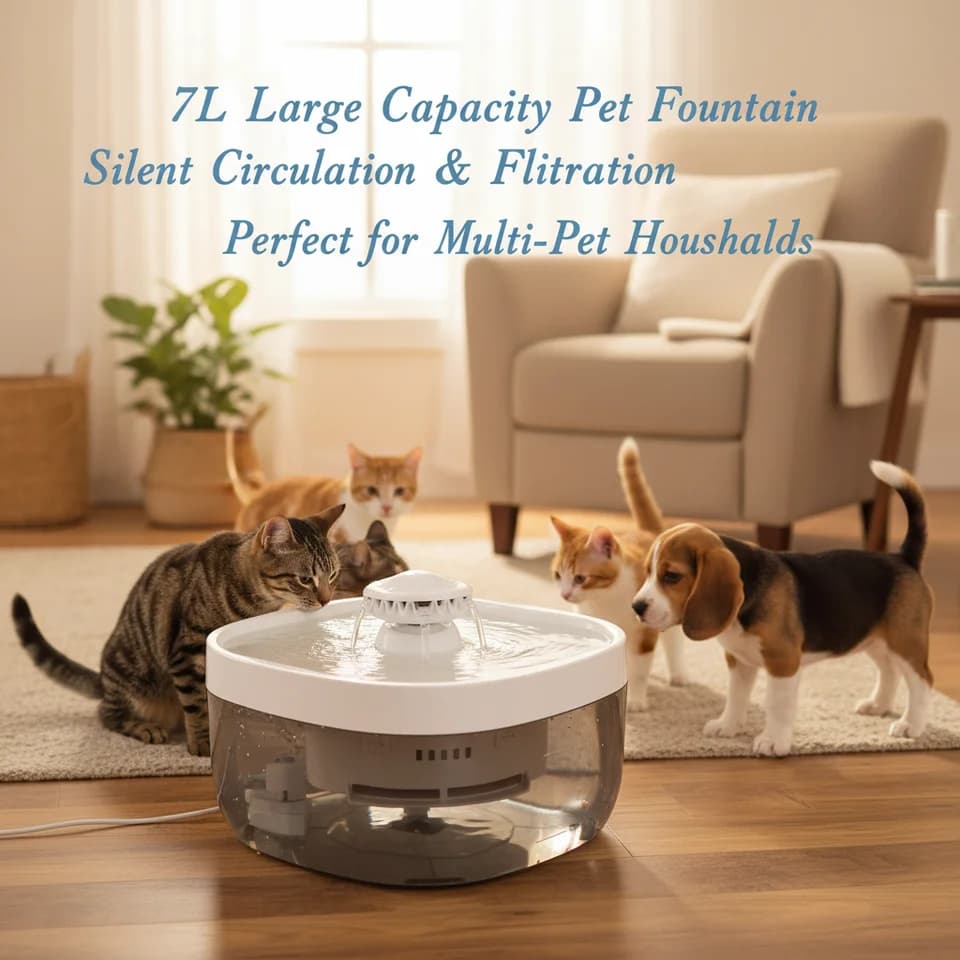
For the majority of indoor, kibble-fed cats, a fountain is worth it. The [Silent Cat Water Fountain](/products/silent-cat-water-fountain) specifically addresses the main objections to fountains:
Noise: The biggest complaint about most fountains is pump noise, especially at night. This fountain runs at under 40 decibels — below the threshold most people notice.
Cleaning: The simple design disassembles fully, and all parts are dishwasher-safe. Weekly cleaning takes about 3 minutes.
Capacity: Large enough for multi-cat households or owners who travel occasionally.
Filter replacement: Standard activated carbon filters, replaced monthly.
Making the Switch
Some cats adapt immediately. Others need a transition period.
If your cat is skeptical:
1. Run both the fountain and a bowl simultaneously for 1–2 weeks
2. Place the fountain where the bowl currently is (location matters to cats)
3. Try different water levels — some cats prefer the bowl-style surface, others prefer the stream
4. Keep the bowl clean — if the fountain water smells like plastic, cats will reject it (run the fountain for 24 hours before the first use)
Most cats that initially ignore a fountain start using it within 2 weeks. The rare cat that genuinely prefers a bowl is probably fine with their current setup.
Bottom Line
| | Fountain | Bowl |
|---|---|---|
| Hydration | ↑ 50-100% more drinking | Baseline |
| Maintenance | Weekly cleaning | Daily water change |
| For kibble cats | High value | Adequate |
| For wet food cats | Moderate value | Adequate |
| For urinary-prone cats | Strongly recommended | Not ideal |
If you're on the fence, start with a fountain. The hydration benefits for kibble-fed cats are well-documented and the stakes (kidney disease, urinary blockages) are high enough that the modest maintenance effort is worth it.
Ready to Try It?
Everything mentioned in this article ships free. Use code WELCOME10 for 10% off your first order.
Shop PawHaven →