
Best Cat Water Fountains in 2026: Keep Your Cat Hydrated
Cats are notoriously bad at drinking enough water, which leads to kidney disease and UTIs. Here's how a cat water fountain fixes that — and which one to buy.
Cats evolved in deserts. Their kidneys are remarkably efficient at concentrating urine — which means they have a low thirst drive and often don't drink enough water from a still bowl. The result: chronic low-grade dehydration that contributes to kidney disease and urinary tract infections, two of the most common (and expensive) health problems in cats.
The solution most vets recommend? A cat water fountain.
Why Cats Need Running Water
In the wild, cats instinctively associate moving water with freshness and safety. Still water in a bowl looks suspicious to them — it could be stagnant. A fountain's moving water triggers the natural drinking response.
Beyond instinct, there are practical advantages:
- Oxygenation: Moving water stays more oxygenated, which cats can smell and taste. Most cats find it more appealing.
- Temperature: Fountains circulate water so it stays cooler — cats prefer cooler water.
- Freshness: Filters in good fountains remove hair, debris, and odors that quickly accumulate in still bowls.
- Visibility: Some cats have difficulty seeing where still water ends and the bowl begins (especially with white cats or in bright light). Moving water gives them visual cues.
Studies comparing cats with access to both fountains and still bowls consistently show cats drink 50–100% more water when a fountain is available.
Signs Your Cat Isn't Drinking Enough
Watch for:
- Dark yellow urine (should be pale yellow)
- Reduced urination (should be 2–4 times daily)
- Dry or tacky gums
- Lethargy
- Straining to urinate (emergency — see vet immediately)
Cats with kidney disease, diabetes, or hyperthyroidism have especially high water needs.
What to Look for in a Cat Water Fountain
Capacity: 1.5–2 liters minimum for one cat; 3+ liters for two or more cats. Don't want to fill it daily.
Filter quality: Activated charcoal removes odors; foam pre-filters catch hair and debris. Both should be replaceable.
Noise level: A fountain that sounds like a motorboat will stress your cat. Look for ceramic or quality plastic models with quiet pumps.
Material: Ceramic and stainless steel are best — they don't harbor bacteria the way scratched plastic does. Some cats develop feline acne from plastic bowls.
Ease of cleaning: You need to clean the fountain weekly. Any model with lots of hard-to-reach crevices will quickly become a bacteria trap.
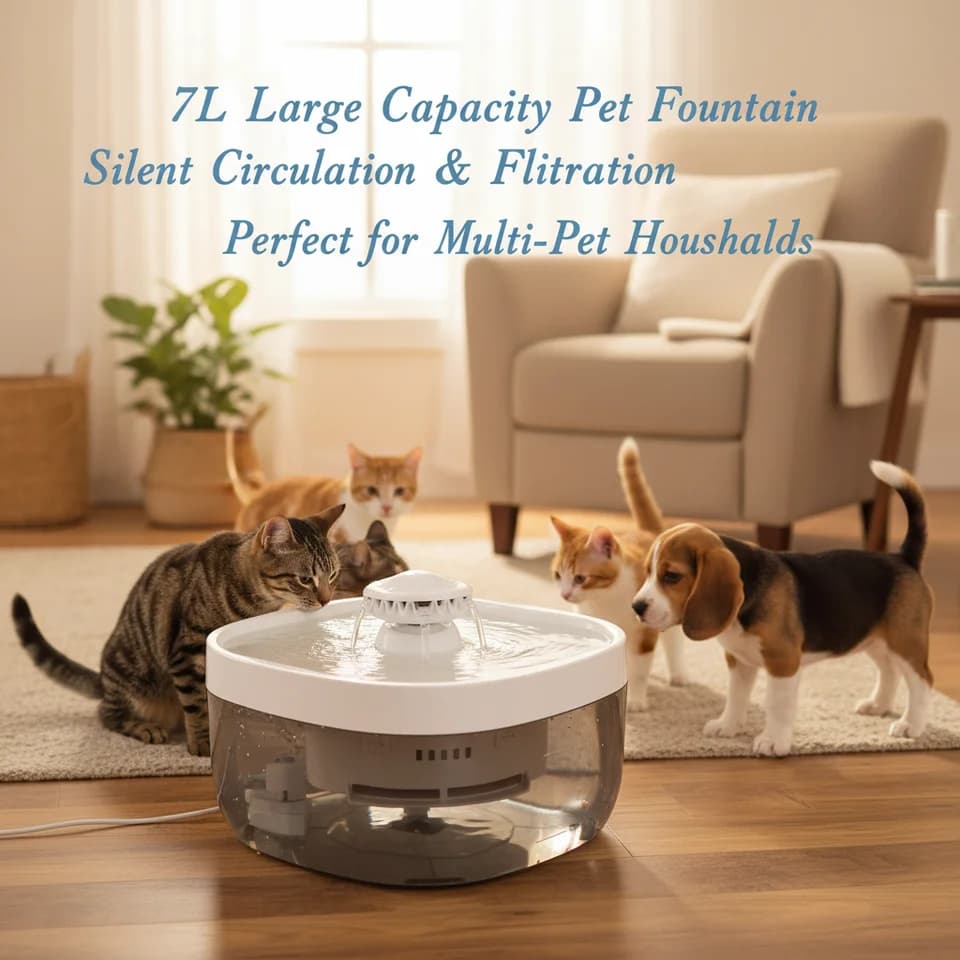
Our Top Pick: The Cat Water Fountain
Our ceramic cat water fountain checks every box. Here's the breakdown:
Quiet pump: In our tests, completely inaudible from more than 4 feet away. Most cats habituated within 30 minutes.
3-liter capacity: Adequate for 2 cats for 2–3 days between top-ups. Importantly, it has a water level window so you can check without lifting the lid.
Dual filter: Activated charcoal + foam pre-filter. Replacement filters are inexpensive and last about a month.
Ceramic construction: Food-grade, non-porous ceramic. Easy to clean in the dishwasher (top rack). No scratches = no bacteria hiding spots.
Gentle flow: Streams from a quiet spout into the bowl below, plus a gentle bubble at the base. Both types of movement appeal to different drinking styles — some cats prefer to drink from the stream, others from the pool.
One of our customers, Amanda K. from Nashville, reported: "My cats stopped fighting over the water bowl the moment I set up this fountain. They both drink so much more water now."
Fountain vs. Running Tap
Some owners solve this by letting the tap drip. This is worse than a fountain for several reasons:
- Wastes significant water
- Your tap water isn't filtered
- The constant sound of running water can be annoying for humans
- You can't leave home without turning it off
A good fountain costs less than a single vet visit for a UTI.
Setting Up for Success
Placement matters: Put the fountain away from the food bowl. In nature, cats don't drink where they eat (potential contamination from prey). Many cats refuse fountains placed next to food.
Multiple locations: For multi-cat households or large homes, consider a fountain on each floor.
Keep the old bowl initially: Don't remove the water bowl the moment the fountain arrives. Let your cat explore the fountain for a few days before making it the only option.
Clean weekly: Monthly at minimum, but weekly is better. Biofilm forms quickly in standing water, even filtered.
The Bottom Line
If your cat is prone to UTIs or kidney issues — or if you just want to prevent those problems — a cat water fountain is one of the highest-ROI investments you can make in their health. The reduced vet bills alone pay for it within a year.
Look for: ceramic or stainless material, quiet pump, dual filter, 2L+ capacity, and ease of cleaning.
Ready to Try It?
Everything mentioned in this article ships free. Use code WELCOME10 for 10% off your first order.
Shop PawHaven →