
Best Pet Products for Apartment Dogs (Small Space, Happy Dog)
Living in an apartment with a dog doesn't mean sacrificing their wellbeing. These products solve the unique challenges of small-space dog ownership.
Apartment living with a dog is absolutely doable — even with large breeds. But it does require the right tools. Without outdoor space to self-regulate, apartment dogs need indoor enrichment that meets their physical and mental needs.
Here's exactly what to get.
The Apartment Dog's Unique Challenges
Limited self-regulation: Dogs in homes with yards can burn energy any time — run a lap, dig, roll in the grass. Apartment dogs can only move when you take them out.
Noise sensitivity: Close neighbors, hallway sounds, and building noises can make apartment dogs anxious. Thin walls amplify everything.
Bathroom logistics: Especially with puppies or seniors, getting outside quickly is harder. Accidents are more likely.
Exercise gaps: Between work hours, a dog in a 600-square-foot apartment may be cooped up for 8+ hours. Without enrichment, behavioral problems develop fast.
What Actually Helps
### Indoor Enrichment (Most Important)
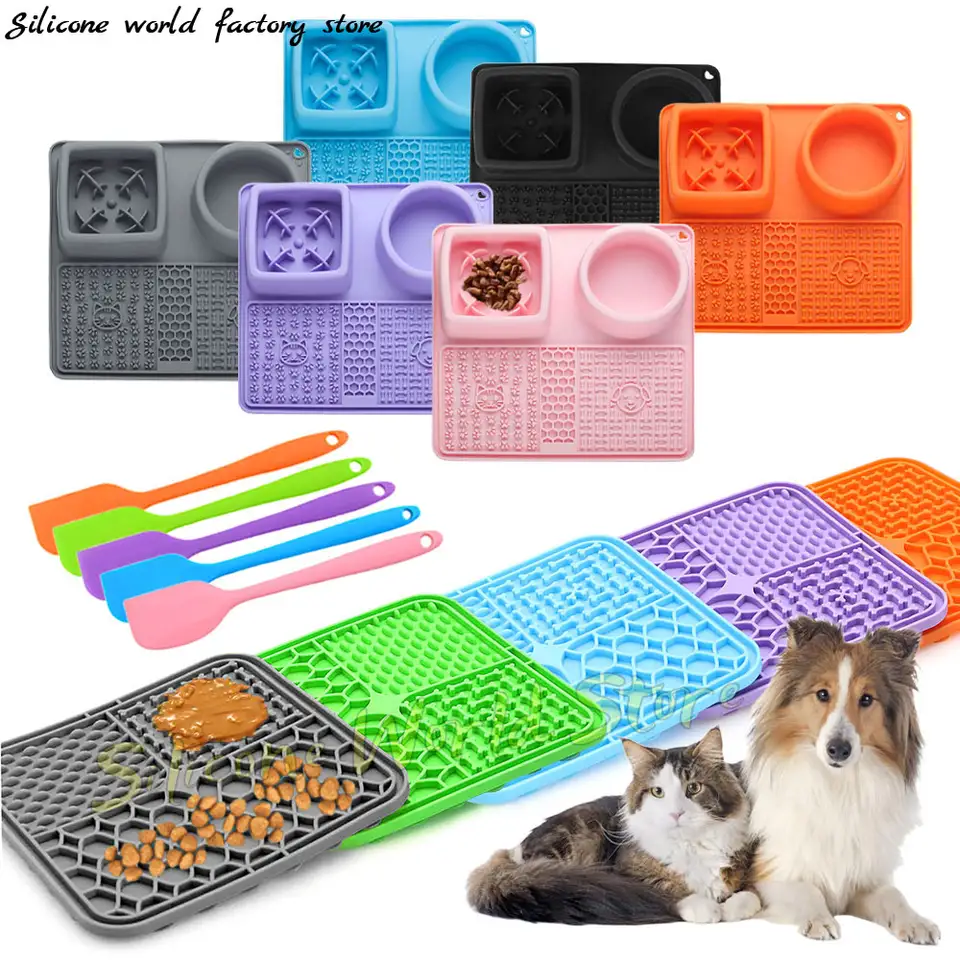
A [lick mat](/products/lick-mat-suction-cups) is the single most-recommended product for apartment dogs. Spread peanut butter, wet food, or pumpkin on one and freeze it — you get 20–30 minutes of calm, focused activity that burns mental energy without requiring any space.
A [snuffle mat](/products/snuffle-mat) works similarly for feeding time. Hiding kibble in fabric loops satisfies foraging instinct and extends meal time 5–10x. For apartments where you need your dog to be calm while you work, this is invaluable.
### Calming Solutions
Apartment noise and close neighbors are a real stressor for many dogs. A [calming pet bed](/products/calming-pet-bed) with raised edges creates a secure denning space that significantly reduces anxiety. The raised rim lets dogs rest their chin — a comfort position that lowers heart rate.
For dogs with noise sensitivity, pair the calming bed with white noise. A fan, air purifier, or white noise machine masks hallway sounds that trigger barking.
### Exercise in Small Spaces
Tug of war: 10 minutes of tug burns energy fast. Grab a quality rope toy and go. Tug doesn't create aggression — it's a cooperative game that strengthens your bond.
Training sessions: Mental exercise is exhausting. A 15-minute session of sit, stay, leave it, and new tricks will tire a dog as much as a 45-minute walk.
Stair work: If your building has stairs, use them. Stair climbing is excellent low-impact cardio for dogs.
Long-line sniff walks: Even apartment walks are better when you let the dog sniff. Sniffing at a natural pace for 30 minutes is more tiring than a 30-minute power walk. Let them lead with their nose.
### For Noise-Sensitive or Anxious Dogs
Apartment dogs are more likely to develop separation anxiety because the contrast between company and solitude is more pronounced in a small space. If you're gone 8 hours a day, your dog goes from constant close proximity to complete isolation.
Signs of separation anxiety: destructive behavior, excessive vocalization when you leave, self-harm (paw licking, tail chasing).
Interventions that work: puzzle feeders on departure (positive association with leaving), gradual absences starting at 5 minutes, and calming beds that maintain the sense of security.
### Apartment-Specific Products That Help
Pee pads or dog door (if rules allow): For puppies and seniors, having indoor bathroom options reduces the stress on both of you.
Collapsible food/water bowls: Pack easily for traveling between home and wherever you take your dog.
No-pull harness: Apartment walking often means crowded sidewalks, elevators, and small lobbies. A [no-pull harness](/products/no-pull-dog-harness) gives you control in tight spaces.
Portable water bottle with bowl: Essential for city dogs on hot days. Many walks don't have accessible water.
The Most Important Thing
The products help, but the biggest factor in an apartment dog's wellbeing is consistency. A consistent walk schedule (morning and evening at minimum), predictable feeding times, and daily enrichment sessions make apartment living genuinely good for dogs — regardless of space.
The apartment dogs I see thriving are almost always owned by people who treat the limitations as reasons to be more intentional, not excuses. They walk more, train more, and engage more than suburban dog owners who rely on a yard to do the work for them.

Ready to Try It?
Everything mentioned in this article ships free. Use code WELCOME10 for 10% off your first order.
Shop PawHaven →