
Best Dog Grooming Tools in 2026 — Tested on Real Dogs
The right grooming tools save time, reduce shedding, and keep your dog comfortable between professional appointments. Here are the three essentials every dog owner needs.
Professional grooming is expensive — and most dogs need coat maintenance between appointments anyway. The right at-home tools keep your dog's coat healthy, clean paws after every walk, and dramatically reduce shedding in your home.
1. A Self-Cleaning Slicker Brush
For most dog coats, a slicker brush is the single most useful grooming tool you can own. The fine steel pins penetrate the outer coat to detangle and remove loose undercoat — the fur that otherwise ends up on your floors, furniture, and clothing.
The key feature is self-cleaning: a button that retracts the pins and ejects collected fur into the trash. Without this, you spend as much time pulling fur off the brush as you do brushing your dog.
Best for: Double-coated breeds (Huskies, Goldens, Collies, Labs), long-haired dogs, and heavy shedders.
Technique: Work in sections, brushing in the direction of hair growth. Pay extra attention to areas prone to matting: behind the ears, under the armpits, around the collar, and the base of the tail.
2. A Portable Paw Cleaner
This is the most underused grooming tool in most households. After every walk, your dog's paws carry bacteria, allergens, road salt, pesticides, and mud into your home.
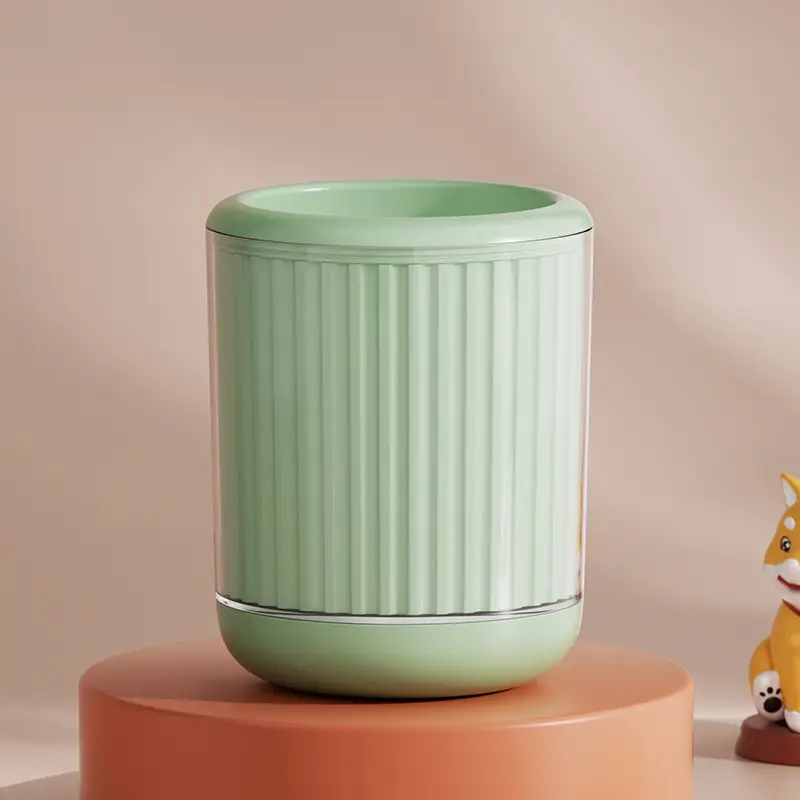
A portable paw cleaner solves this in under a minute. Fill with water, insert each paw, twist gently. Soft silicone bristles loosen debris without irritating paw pads. Gentle enough for daily use.
Pro tip: Keep it by the front door so it becomes part of the coming-home routine. Dogs learn the habit quickly.
3. A Rubber Grooming Glove (for Sensitive Dogs)
Some dogs tolerate slicker brushes well. Others act like you're torturing them. For brush-resistant dogs, a rubber grooming glove often works — it feels like petting, so dogs don't object.
Rubber gloves also excel on short-coated breeds where slicker brushes have less to grab. The rubber nubs lift dead hair off the coat effectively.
How Often to Groom
- Short-haired dogs: Weekly brushing, daily paw cleaning after walks
- Medium to long-haired dogs: 3–4 times per week; daily during shedding season
- Double-coated breeds: Daily brushing in spring and autumn during coat "blowing"
The At-Home vs. Professional Balance
You shouldn't need professional grooming for coat maintenance if you brush regularly. Consistent at-home brushing between appointments makes professional sessions faster and cheaper — a mat-free coat takes half the grooming time.
The three tools above cover 90% of what most dog owners need between visits.

Ready to Try It?
Everything mentioned in this article ships free. Use code WELCOME10 for 10% off your first order.
Shop PawHaven →