How to Introduce Two Cats Without a War
The most common mistake people make when bringing a new cat home: they let the cats meet on day one. This almost always results in hissing, swatting, one cat hiding, and sometimes a full fight that sets back the relationship by weeks or months.
Cats are territorial. Unlike dogs, who evolved in social packs with clear hierarchy and reconciliation behaviors, cats are primarily solitary hunters. Their social structures are flexible — they can coexist, even bond — but they need time to adjust to a new animal sharing their space. The introduction process isn't optional. It's the difference between two cats who tolerate each other and two cats who genuinely choose each other's company.
Phase 1: Separate Spaces (Days 1-7)
The new cat goes into a dedicated room — a bathroom, bedroom, or spare room — with their own food, water, litter box, bedding, and toys. The door stays closed.
This serves several purposes. The new cat has a safe space to decompress after the stress of travel and a new environment. The resident cat still has free run of the rest of the home and doesn't feel their territory is being invaded. Both cats can smell and hear each other without visual contact, which is the first step in social introduction.
Feed both cats near the door — resident cat on one side, new cat on the other. Neither can see each other, but they associate the smell coming under the door with a positive experience (food). Do this at every meal during Phase 1.
Signs Phase 1 is going well: both cats are eating normally, using the litter box, and interacting with you. Some hissing at the door is normal and expected. Spraying or refusing to eat for more than 24 hours is not — consult a vet or behaviorist.
Phase 2: Scent Swapping (Days 3-10, Overlapping Phase 1)
While the cats are still separated, begin scent swapping. Take a cloth or sock and rub it on the new cat's cheeks (where they have scent glands) and place it near the resident cat's food bowl. Do the reverse — rub a cloth on the resident cat and place it in the new cat's room.
You can also swap bedding. Put the new cat's blanket where the resident cat sleeps, and vice versa. If either cat hisses and retreats, that's fine — they'll investigate in their own time.
Phase 3: Visual Contact (Days 7-14)
Once both cats are eating calmly and showing curiosity rather than distress at the door, open it slightly with a door stop or baby gate — just enough for them to see each other, not to have full access.
Continue feeding near the barrier. Supervise these sessions. Watch for:
- Relaxed body language (soft tail, forward ears, normal eating) — good sign, can extend sessions
- Staring without eating — back up the food bowls a bit
- Hissing and retreating — normal, end the session and try again tomorrow
- Lunging or sustained aggressive display — too fast, go back to Phase 1 for a few more days
Don't force them to be near each other. Let them set the pace.
Phase 4: Supervised Access (Days 10-21)
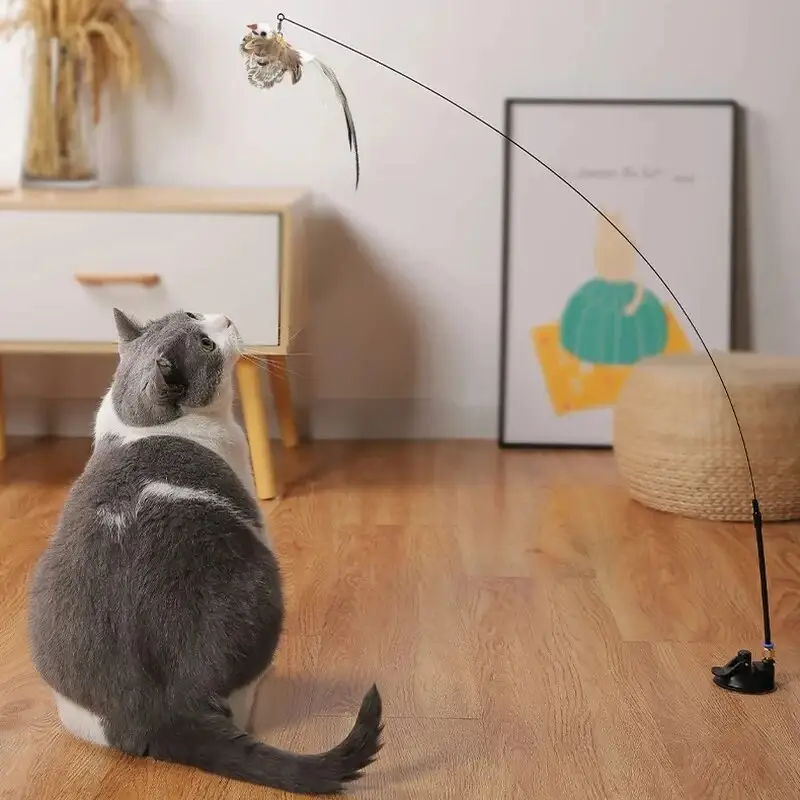
Open the door fully during supervised periods. Have a distraction ready — a fishing rod toy, wand toy, or treat scatter on the floor. This gives both cats something to do besides stare at each other.
Interrupt early signs of escalation (tail lashing, flattened ears, direct stalking) with a noise distraction or by physically redirecting with a toy. Don't physically intervene in a fight with your bare hands.
Phase 5: Unsupervised Access
Once both cats are able to be in the same room calmly for 30+ minutes without incident across multiple supervised sessions, you can begin leaving them together unsupervised for short periods. Have multiple resources (litter boxes, food stations, high perches) in the home so no single resource is contested.
The full timeline from separated to fully integrated is usually 3-6 weeks for adults. Kittens typically integrate faster. Adult cats with previous trauma, resource guarding, or territorial histories may need longer — sometimes months.
Resources to Have Ready
Multiple litter boxes (rule of thumb: one per cat plus one extra), feeding stations in separate locations, tall cat trees or shelves so both cats can be in the same room at different heights, and Feliway multicat diffusers — a synthetic feline pheromone shown in studies to reduce intercat tension during introductions. It's not magic but it helps.


Ready to Try It?
Everything mentioned in this article ships free. Use code WELCOME10 for 10% off your first order.
Shop PawHaven →