15 Indoor Cat Enrichment Ideas for 2026
Indoor cats live longer, safer lives than outdoor cats — but they pay a price. A cat who never hunts, climbs, explores, or solves problems is like a working dog who never works: the mental and physical needs are still there, and when they go unmet, they find expression in destructive behaviors, anxiety, aggression, or depression.
Enrichment is the solution. It's not about buying expensive toys (though some are genuinely useful). It's about designing an environment and a daily routine that meets a cat's core behavioral needs: hunting, climbing, hiding, scratching, and social interaction on their terms.
Here are 15 ideas organized by effort level.
Low Effort (5 Minutes or Less)
1. Window perch. A simple suction-cup perch turns a window into a TV for your cat — birds, squirrels, passing people. Cats can watch for hours. Place near a bird feeder outside for maximum engagement.
2. Cardboard boxes. Leave them out after deliveries. Cats are drawn to enclosed spaces for security; a box on the floor will be investigated, slept in, and shredded over a week or two of use.
3. Paper bags (handles removed). Crinkle, hide treats inside, let them explore. Remove handles to prevent neck entanglement.
4. Rotate toys. Don't leave all toys out all the time. Put most away and rotate on a weekly basis — toys that seemed boring become exciting again after a week in a drawer.
5. Scatter feeding. Instead of placing food in a bowl, scatter dry kibble across a mat, in a snuffle mat, or across multiple small containers. Activates foraging behavior and extends mealtime.
Medium Effort (15-30 Minutes)
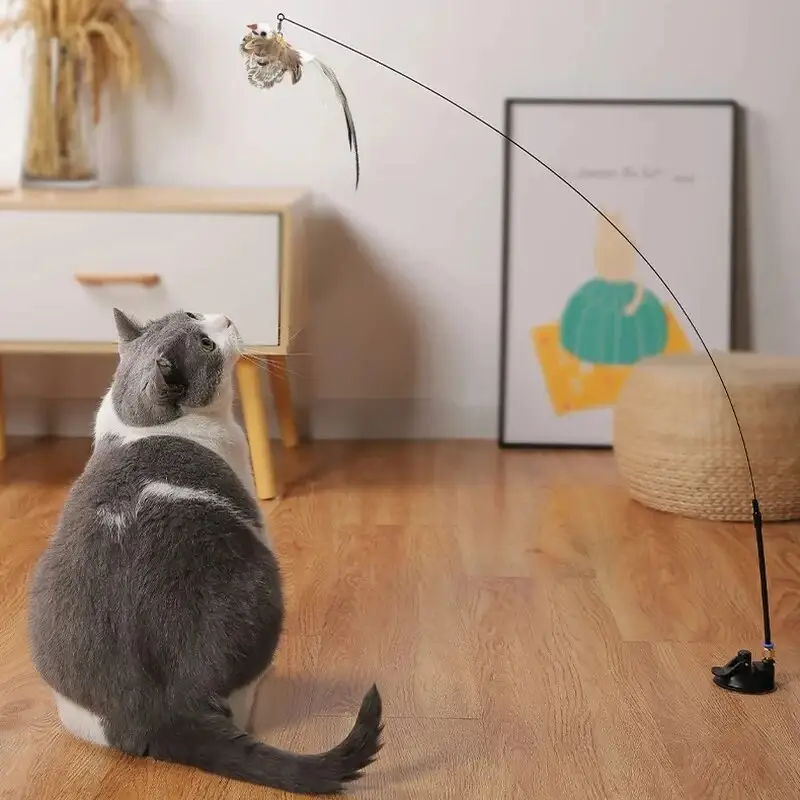
6. Wand toy sessions. 10-15 minutes of active wand toy play twice a day meets most cats' hunting needs. The key: let them catch the prey. If the "prey" always escapes, cats disengage — they learn the hunt is futile. Let them catch and "kill" the toy regularly.
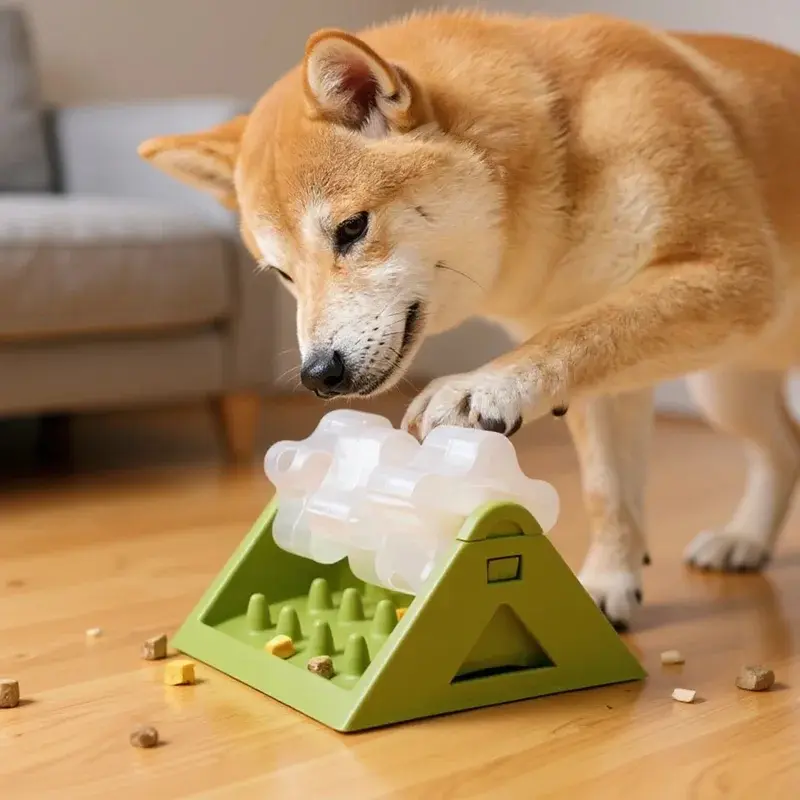
7. Puzzle feeders. Food dispensing puzzles replace bowl feeding with a hunt. Start simple (a muffin tin with kibble) and increase complexity as your cat gains skill. Many cats never return to bowl feeding once they experience puzzle feeders.
8. Tunnels. Cat tunnels satisfy the need for cover during a simulated hunt. Crinkle tunnels with multiple openings are especially popular. Wave a wand toy through the openings.
9. Vertical space. Cat trees, wall-mounted shelves, and cleared high surfaces give cats territory at elevation, which they naturally seek for safety and survey. A shy cat with nowhere to go up becomes a stressed cat.
10. Hide treats around the room. Simple foraging activity. Hide 10-15 small treats in various locations and let your cat find them. Takes 30 seconds to set up; cats may spend 30 minutes working through it.
Higher Effort (Ongoing Setup)
11. Catio or enclosed outdoor access. Even a small window box catio — basically a screened enclosure attached to a window — gives a cat access to outdoor smells, sounds, and sights safely. Significantly improves quality of life for cats who seem perpetually frustrated by the outdoors they can see but not reach.
12. Clicker training. Yes, cats can be clicker trained. Sit, stay, spin, high-five — all achievable with patience and high-value treats. Training sessions provide mental stimulation that physical play doesn't replicate, and they strengthen the cat-owner bond.
13. Bird feeder outside a dedicated window. Combine this with a window perch. A bird feeder positioned for a cat's viewing window turns passive observation into an active, ever-changing show.
14. Herb garden (cat-safe species). Cat grass, valerian, silver vine, and catnip grown in pots provide scent enrichment and tactile stimulation. Not all cats respond to catnip (it's genetic), but most respond to at least one of these options.
15. Second cat. The highest-effort solution — but for the right cat in the right household, a companion dramatically improves quality of life. Social cats left alone for most of the day often do better with a feline companion. Requires proper introduction protocol (see our cat introduction guide).
A Note on Play Quality
The most enriching play mimics predation: stalk, chase, catch, kill, groom, sleep. Good play ends with a catch and a wind-down. Give your cat a small treat after play sessions to complete the prey sequence — this is the behavioral loop cats are designed for.
Enrichment doesn't need to be expensive or elaborate. It needs to be consistent. Ten minutes of wand play and a scatter feeding, daily, is more valuable than an expensive cat tree that sits unused because you never play with them on it.

Ready to Try It?
Everything mentioned in this article ships free. Use code WELCOME10 for 10% off your first order.
Shop PawHaven →