Why Do Cats Knock Things Over? (And How to Redirect It)
If you've owned a cat, you've watched them make direct eye contact with you, pause for effect, and then deliberately push something off a table. It's funny. It's also infuriating. And it prompts a near-universal question: why?
The short answer: it's not malice. Cats don't have the cognitive architecture for spite in the way humans experience it. The behavior is driven by instinct, curiosity, and sometimes attention-seeking — all of which are redirectable once you understand what's actually happening.
Reason 1: Prey Testing
Cats are hardwired to test objects before committing to them. In the wild, a mouse that looks dead might not be — pawing at it confirms whether it will move (and flee, triggering the chase response) or stay still (and is safe to bite). Your cat is doing the same thing to your water glass. The paw swipe tests whether the object is alive, will move, and is worth pursuing.
Objects that roll, fall, or make sound when pushed are especially interesting — they behave like small prey. This is why round objects, pens, and anything that wobbles gets pushed more than flat or heavy objects.
Reason 2: Attention Seeking
Cats are quick learners. If a cat has discovered that knocking something over gets an immediate reaction from you — any reaction, including yelling — they've learned a reliable method of getting your attention. In behavioral terms, negative attention is still attention, and for a bored or attention-hungry cat, it's worth the knocked-over glass.
This is one of the clearest cases of owner-reinforced behavior in cats. The cat tests the behavior once, gets a strong reaction, and repeats it. Eventually it becomes the default "pay attention to me" behavior.
Reason 3: Exploration and Sensory Curiosity
Cats gather information about their environment through touch, sound, and smell. Pushing objects off surfaces reveals how they sound when they hit the floor, how they bounce, and what happens next. A cat who seems fascinated by the actual falling and impact — watching the trajectory, following the object on the floor — is probably exploring rather than seeking attention.
Reason 4: Understimulation
A bored cat is an active cat in the wrong way. If a cat's hunting and exploration drives aren't met through play and environmental enrichment, they find other outlets. Knocking things off shelves, counter surfing, and nocturnal zooming are all commonly overstimulation-driven behaviors in cats who don't have adequate outlets for their energy.
How to Redirect the Behavior
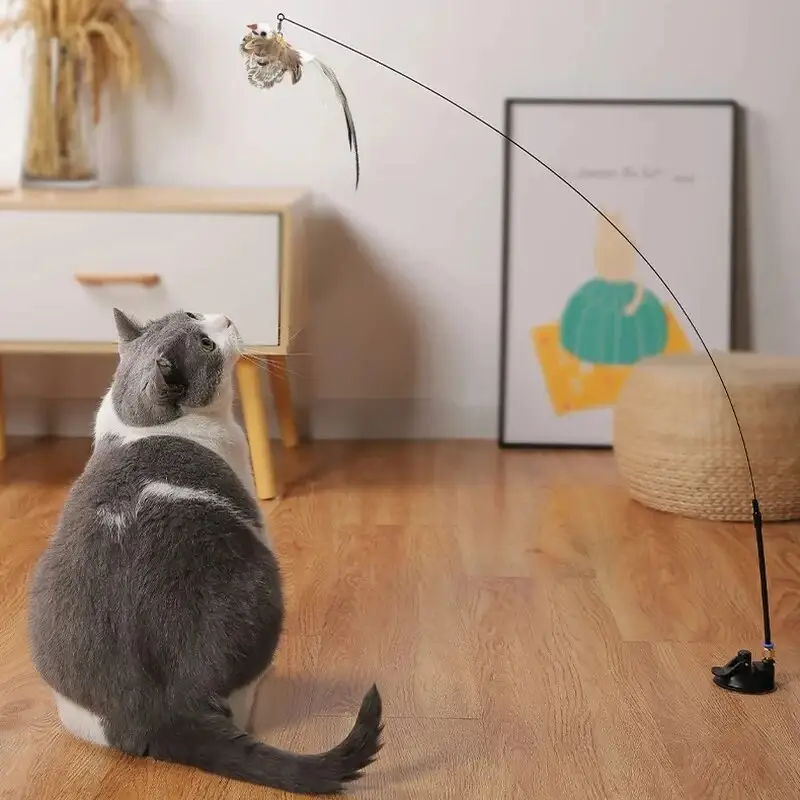
Increase interactive play. The single most effective intervention for attention-driven and boredom-driven knocking is 10-15 minutes of wand toy play, twice daily. Cats who've had their hunting drive satisfied are significantly less likely to improvise.
Don't react. For attention-seeking knockers, the goal is extinction — removing the reward. When the cat knocks something over, don't react at all. Turn away, leave the room, give zero engagement. If you hold firm, the behavior usually extinguishes within two to three weeks. If you react even inconsistently, the variable reinforcement makes the behavior more persistent.
Clear the surfaces they use. If there's a specific shelf or counter the cat returns to, removing the objects removes the opportunity. Combined with increased play, most cats move on.
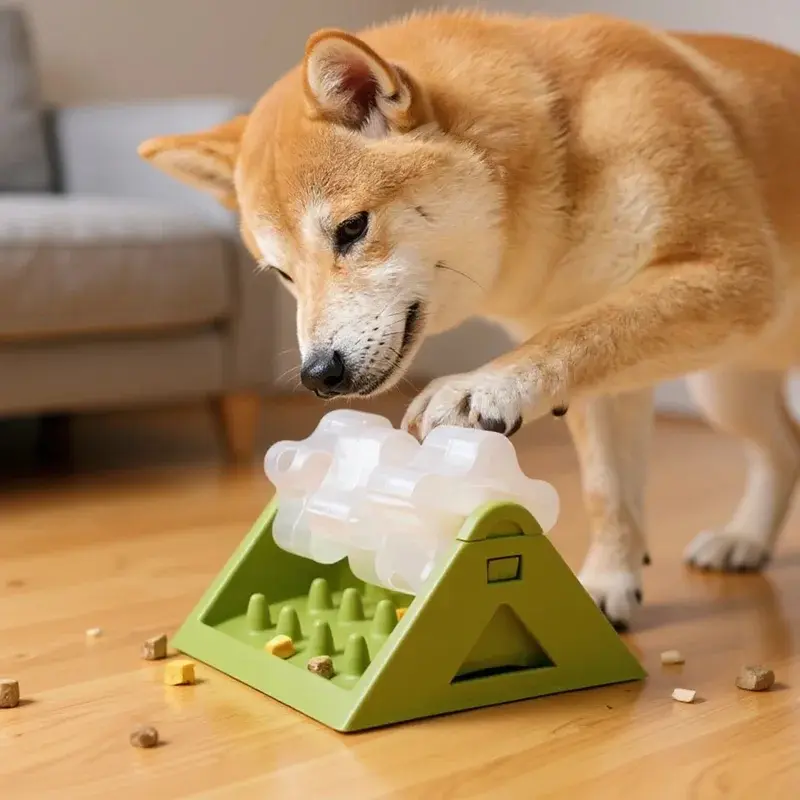
Give them sanctioned pushing. Puzzle feeders, treat balls, and toys that respond to batting give cats an appropriate object to push and paw at. A treat ball rolling across the floor is functionally identical to a glass falling off a table, from the cat's perspective — but you're not upset about the ball.
Address the underlying need. If the behavior has been going on for a long time, it's worth auditing the cat's daily routine. Are they getting at least two play sessions? Do they have vertical space, hiding spots, and window access? Do they have a consistent daily schedule? Chronic knocking in an otherwise calm, healthy cat is usually an enrichment problem.
The behavior doesn't mean your cat is bad or dominant or trying to spite you. It means your cat is a cat — with hunting instincts, curiosity, and a very effective method of getting what they want. Meet those needs more directly, and the method becomes unnecessary.

Ready to Try It?
Everything mentioned in this article ships free. Use code WELCOME10 for 10% off your first order.
Shop PawHaven →